We’ve all been there. You finish a delicious, satisfying meal, and within twenty minutes, your stomach feels like an overinflated balloon. Your jeans suddenly feel uncomfortably tight, and the physical pressure makes you want to cancel your plans and curl up on the couch for the rest of the day.
Bloating after meals is incredibly common, but that doesn’t mean you have to just grit your teeth and live with it. While occasional gas is a normal byproduct of digestion, severe or constant digestive discomfort is your body’s way of asking for a little help. The good news? You don’t always need to reach for over-the-counter medicine. There are plenty of gentle, highly effective methods to reduce bloating naturally just by tweaking your daily habits. Let’s look at 10 proven ways to soothe your stomach and get your digestion back on track.
Table of Contents
- Why Do We Get Bloated After Meals?
- 10 Ways to Reduce Bloating Naturally
- Quick Reference: Bloating Triggers vs. Soothers
- Key Takeaways
- Frequently Asked Questions (FAQs)
- Conclusion
Why Do We Get Bloated After Meals?
Before diving into natural bloating relief, it helps to understand why your stomach swells in the first place. Often, it comes down to swallowing too much air, eating in a rushed panic, or consuming foods that create excess gas as they ferment in your gut. Over time, an imbalance in your gut microbiome or sudden changes in your daily routine can also trigger that heavy, uncomfortable feeling.
10 Ways to Reduce Bloating Naturally
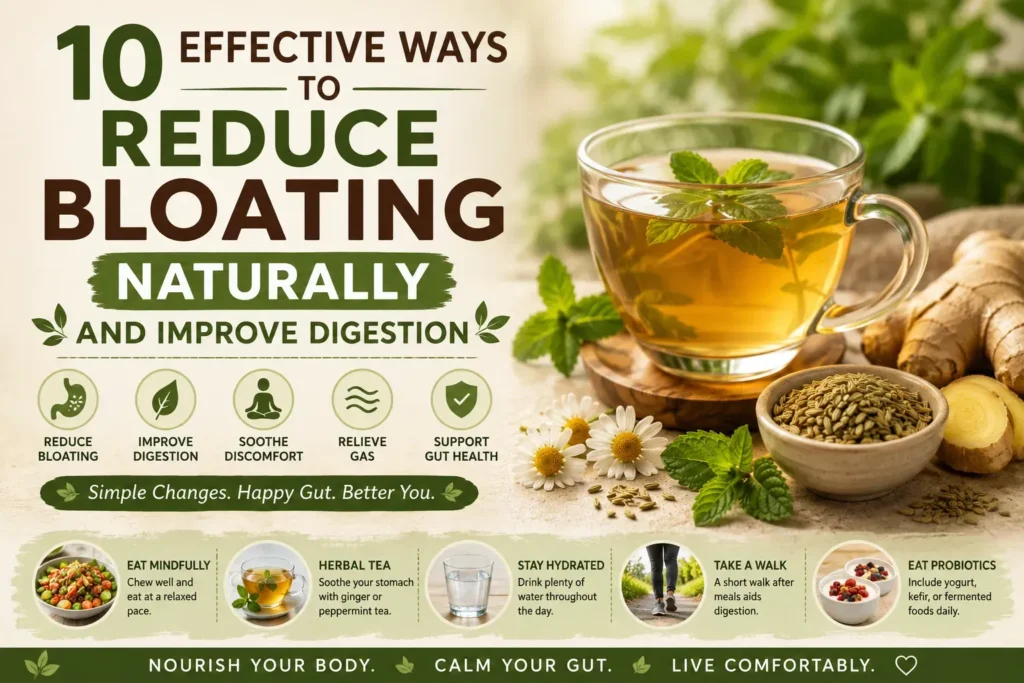
1. Practice Mindful Eating and Chew Food Properly
Digestion begins in your mouth, not your stomach. When you inhale your food on the go, you swallow extra air, which travels straight to your digestive tract and causes swelling.
Try to slow down at the dinner table. Chewing food properly breaks it down into easily manageable pieces and mixes it with saliva, which contains essential digestive enzymes. This simple, free habit is one of the absolute best ways to reduce stomach bloating naturally.
2. Sip on Herbal Tea for Bloating
Certain herbs have been used for centuries to calm an agitated digestive tract. A warm cup of herbal tea for bloating after lunch or dinner works wonders for quick indigestion relief.
Peppermint tea naturally relaxes the intestinal muscles, allowing trapped gas to dissipate. Meanwhile, ginger tea accelerates stomach emptying. Both are fantastic home remedies for bloating that you can easily keep stocked in your pantry.
3. Hydrate Consistently Throughout the Day
Water is your digestive system’s best friend. Proper hydration keeps food moving smoothly through your gastrointestinal tract, preventing the constipation that almost always leads to gas and bloating.
However, try not to chug massive glasses of ice water right in the middle of a heavy meal, as this can dilute your natural stomach acid. Instead, sip room-temperature water steadily throughout the entire day.
4. Chew Fennel Seeds After Meals
In many cultures, chewing a small pinch of fennel seeds after eating is a daily tradition—and for good reason!
Fennel contains naturally antispasmodic compounds that relax the smooth muscles in your gut. This allows trapped air to pass safely and comfortably, making it a highly effective and quick way to reduce bloating naturally.
5. Monitor Your Fiber Intake
Fiber is absolutely crucial for long-term gut health, but it can be a double-edged sword. If you suddenly double your fiber intake overnight, your digestive system will likely rebel with intense post-meal bloating.
If you are adding more beans, lentils, or raw veggies to your diet, do it slowly. Give your gut bacteria a few weeks to adjust to the new workload.
6. Take a Post-Meal Walk
You don’t need a heavy workout to help your digestion. In fact, intense exercise right after eating can actually stall digestion as blood rushes away from your stomach to your muscles.
Instead, taking a gentle 10-to-15-minute walk helps stimulate the bowels. Physical movement encourages trapped gas to move through your digestive tract, offering rapid bloating relief naturally.
7. Support Your Gut with Probiotics
Your gut is home to trillions of bacteria that help break down your food. When this delicate microbiome is out of balance, digestive discomfort usually follows right behind.
Incorporating probiotics through fermented foods like yogurt, kefir, sauerkraut, or kimchi introduces good bacteria back into your system, promoting healthy digestion over the long term.
8. Identify Your Food Sensitivities
Sometimes, objectively healthy foods are the hidden culprits behind your discomfort. Common triggers include dairy, gluten, and certain complex carbohydrates known as FODMAPs (found in heavy concentrations in garlic, onions, and apples).
Consider keeping a simple food journal on your phone for a week. Tracking what you eat can help you identify exactly which ingredients cause the most bloating after meals.
9. Try Natural Digestive Enzymes
If your body naturally struggles to break down certain types of foods, leaning on digestive enzymes can be a total game changer.
Fruits like pineapple (which contains bromelain) and papaya (which contains papain) are packed with natural enzymes. Eating a small portion of these fruits can assist your body in breaking down heavy proteins, teaching you how to reduce bloating naturally without pills.
10. Avoid Carbonated Drinks and Chewing Gum
Fizzy drinks are quite literally packed with gas. When you drink them, that carbonation gets trapped right in your stomach.
Similarly, chewing gum causes you to continuously swallow small pockets of air. Swapping sparkling water for flat water and ditching the daily gum habit are incredibly simple digestive health tips that yield immediate, noticeable results.
Quick Reference: Bloating Triggers vs. Soothers
| Common Bloating Triggers | Natural Soothers |
| Eating too fast / on the go | Mindful eating and chewing thoroughly |
| Fizzy, carbonated drinks | Warm peppermint or ginger tea |
| Heavy, salty meals | Consistent hydration with plain water |
| Chewing gum | Chewing a pinch of fennel seeds |
Key Takeaways
- Bloating is most often caused by swallowed air, eating too quickly, or sluggish gut motility.
- Simple lifestyle habits—like thoroughly chewing your food and taking a short, gentle walk after eating—can drastically reduce bloating naturally.
- Keep soothing ingredients like ginger, peppermint, and fennel seeds in your kitchen for immediate natural bloating relief.
- Gradually increase your fiber over time and stay hydrated to maintain long-term gut health.
Frequently Asked Questions (FAQs)
1. What is the fastest way to reduce bloating naturally?
The quickest relief usually comes from combining gentle movement with warmth. Taking a 15-minute walk and sipping on hot ginger tea can help relax your digestive muscles and release trapped gas quickly.
2. Does drinking water actually help with bloating?
Yes! While you might feel “full of fluids” when bloated, drinking water actually helps flush out excess sodium from your system. It also keeps your digestive tract moving, which prevents constipation-induced swelling.
3. Are there specific healthy foods that cause post-meal bloating?
Absolutely. Common culprits include beans, lentils, broccoli, cabbage, onions, and dairy products. However, digestive triggers vary widely from person to person, which is why keeping a short-term food diary is highly recommended.
4. When should I be concerned about stomach bloating?
Occasional bloating after a heavy meal is totally normal. However, if your bloating is chronic, severe, or accompanied by unexplained weight loss, sharp abdominal pain, or major changes in bathroom habits, you should consult a doctor to rule out underlying medical conditions.
5. Can daily stress cause my stomach to bloat?
Yes. The gut and brain are deeply connected via the vagus nerve. High stress levels can alter your gut motility and decrease your natural production of digestive enzymes, leading straight to gas and indigestion.
Conclusion
Dealing with constant digestive discomfort can be frustrating, but you don’t have to let a swollen stomach dictate your day. By making small, intentional adjustments like slowing down at the dinner table, brewing a cup of herbal tea, and staying properly hydrated you can effectively reduce bloating naturally.
Remember that healthy digestion is a daily practice, not a one-time fix. Listen to your body, pay attention to which foods trigger your symptoms, and give your gut the gentle, natural support it needs to thrive.
Have you tried any of these natural ways to reduce bloating? Drop a comment below to let us know which remedy works best for your stomach, or share this article with a friend who could use some practical digestive health tips!